
If you’re looking to improve your in-game performance, climb competitive ranks, and win more gunfights, it all starts with one core principle: aim training consistency. Many players grind matches for hours yet see little improvement because they lack a structured approach to refining their mechanics. This article breaks down what actually works—covering lifted gameplay fundamentals, targeted aim routines, smart drill selection, and how to translate practice into real-match impact.
We’ve analyzed high-level gameplay patterns, reviewed proven training methodologies used by top competitors, and tested optimization strategies across multiple titles to separate hype from results. Instead of vague advice, you’ll get clear guidance on building a sustainable routine, avoiding common plateaus, and sharpening your reaction time, tracking, and flick precision.
If your goal is measurable improvement—not just more playtime—this guide will show you how to train smarter, stay consistent, and see real progress where it counts: in-game performance.
Every gamer knows the sting of losing a clutch fight because your crosshair went rogue. It’s tempting to blame talent, reflexes, or “bad aim days.” But inconsistent aim is usually a process problem, not a potential problem.
Spray-and-pray chaos versus structured, repeatable drills—that’s the real matchup. Casual free-play warms you up; targeted scenarios build elite muscle memory. Top-tier players don’t just grind; they track aim training consistency with measurable routines.
This blueprint breaks drills into:
- Micro-adjustment flick reps
- Tracking endurance sets
- Pressure-based duel simulations
Practice more is vague. Practice with feedback is transformative. Think Rocky’s montage—minus meat.
Calibrating Your Arsenal: Why Settings Are the Bedrock of Accuracy
To further enhance your aiming skills, consider experimenting with various game mechanics and settings, such as those found in the ‘Play Masticelator Mods‘, which can add a new layer of challenge to your structured practice.
Great aim doesn’t start with reflexes. It starts with math.
The Sensitivity Equation
eDPI (effective dots per inch) equals your mouse DPI multiplied by in-game sensitivity. If you run 800 DPI and 0.5 sensitivity, your eDPI is 400. Simple—but powerful. Studies on motor learning show consistent input ranges improve precision and error correction over time (Wolpert et al., 2011). Most tactical FPS pros cluster between 200–400 eDPI, favoring control over flash. High sensitivity allows faster turns (great for arena chaos), while low sensitivity supports micro-adjustments (ideal for tactical duels). The key is finding a comfortable range and committing.
Pick a range that fits your desk space and stick to it.
The “Set It and Forget It” Philosophy
Constant tweaking sabotages aim training consistency. Muscle memory—your brain’s ability to automate movement—relies on repetition under stable conditions. Switching sensitivity weekly is like changing a basketball hoop’s height before every free throw (Stephen Curry would object).
Hardware Consistency
A quality mouse sensor reduces tracking error. A large mousepad supports full-arm movement. Proper monitor height minimizes neck strain and stabilizes eye tracking. Small physical shifts create measurable variance in flick accuracy.
Optimizing In-Game Graphics
Disable motion blur. Prioritize high, stable FPS. NVIDIA research shows lower latency directly improves target acquisition speed. Clear visuals equal cleaner shots. Pro tip: stability beats ultra settings every time.
The Digital Dojo: Core Drills for Forging Raw Mechanical Skill
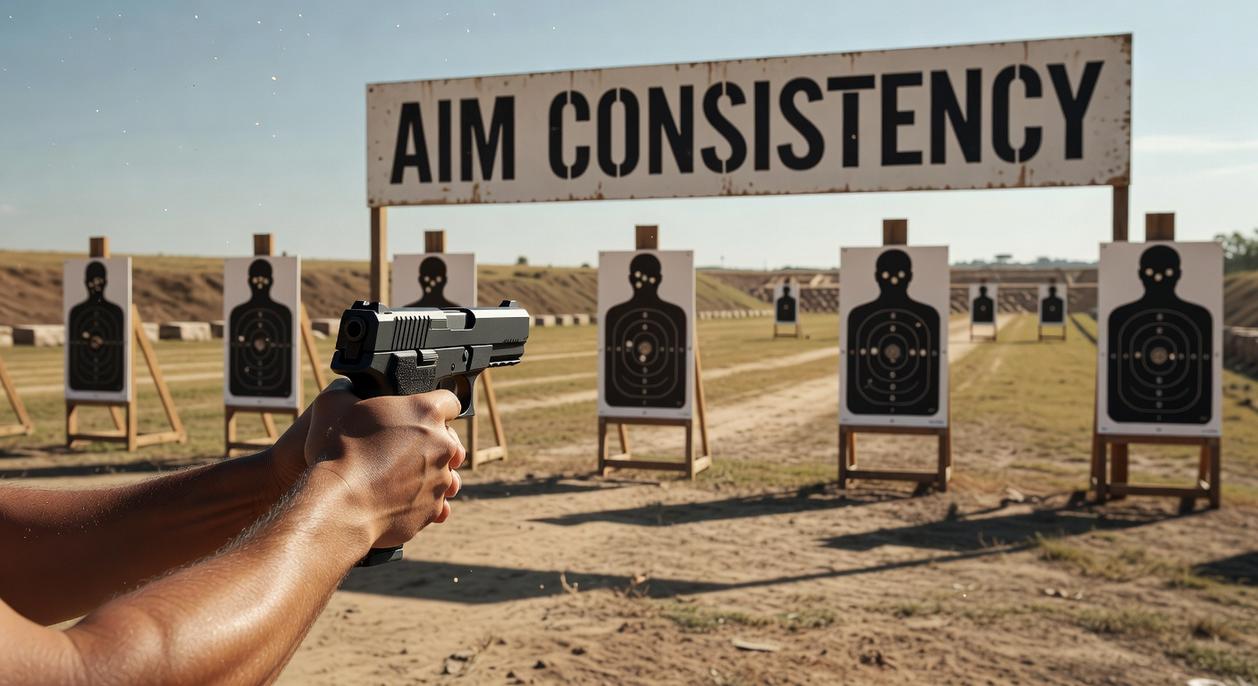
Raw aim isn’t magic. It’s mechanics—trained deliberately, not grinded mindlessly (yes, there’s a difference).
Drill Type 1 – Click-Timing (Flicking)
Click-timing—often called flicking—is the ability to snap your crosshair to a target with speed and precision. Think of it as digital hand-eye calibration. In aim trainers like Aim Lab or KovaaK’s, scenarios such as Static Dot Clicking or Tile Frenzy isolate this skill by forcing rapid, single-shot eliminations.
Some players argue flicking is overrated because real matches involve movement and pressure. That’s fair. Isolated drills don’t replicate chaos. But they build foundational mouse control. Without that baseline precision, advanced skills collapse.
Drill Type 2 – Target Switching
Target switching is the art of eliminating one enemy and instantly transferring to the next. It directly improves spray transfers and multi-kill potential. Scenarios like 1wall6targets or multi-bot elimination drills sharpen this efficiency.
Skeptics say real fights rarely line enemies up conveniently. True. But the neurological benefit—rapid visual acquisition and decisive transitions—translates even in messy engagements (think clutch retakes or PvE swarm phases).
- Focus on minimizing over-flick.
- Reset your crosshair deliberately after each kill.
Drill Type 3 – Smooth Tracking
Tracking is maintaining crosshair contact on a moving target. It’s crucial in longer time-to-kill (TTK) games where sustained accuracy matters more than single taps. Start with smooth, predictable patterns like Close Long Strafes. Progress to evasive scenarios with erratic movement.
I’ll admit: perfect tracking theory is still debated. Sensitivity, grip style, even desk friction complicate things. But smoother mouse control consistently correlates with higher damage uptime (see motor learning research, Schmidt & Lee, 2011).
Structuring Your Practice
A simple 15–20 minute routine:
- 5 minutes click-timing
- 5 minutes target switching
- 5–10 minutes tracking
This structure promotes balanced growth and reinforces aim training consistency.
And remember: mechanics shine brightest when paired with mastering core movement mechanics for high level play. (Aim without movement is like a sports car without tires.)
Pro tip: Stop before fatigue wrecks form—quality reps beat exhausted ones every time.
Bridging the Gap: Translating Practice into In-Game Dominance
The Purposeful Warm-Up
First, let’s separate mindless shooting from intentional preparation. Running into deathmatch and chasing top score might feel productive, but it rarely translates to ranked success. A structured 10-minute routine works better. Spend four minutes focusing only on crosshair placement—keep it at head level while clearing common angles. Next, three minutes on movement: strafe, counter-strafe, and fire only when fully accurate. Finally, three minutes combining both against live opponents, ignoring your scoreboard entirely. Research in motor learning shows that focused, constraint-based drills improve skill retention more than random repetition (Wulf & Lewthwaite, 2016). In other words, warm up with purpose, not ego.
Crosshair Placement Discipline
Meanwhile, understand this: elite aim is predictive, not reactive. Pros pre-aim common angles because reaction time averages 200–250 milliseconds (NIH data), which is often too slow in tactical shooters. Keeping your crosshair where an enemy is most likely to appear reduces the distance you must flick. Watch tournament VODs—notice how little adjustment top players need. It’s chess, not whack-a-mole.
Isolating Weaknesses with VOD Review
Next, record your games. Are you over-flicking past targets? Is your tracking weaker when enemies strafe left? Concrete review beats guesswork. Studies on deliberate practice show feedback-driven correction accelerates improvement (Ericsson, 1993). Use findings to guide aim training consistency instead of grinding aimlessly.
Pressure Testing
Finally, apply this in ranked—one focus per match. For example: “This game, perfect crosshair placement only.” Narrow focus prevents overload and builds automatic habits under pressure (yes, even when the stakes feel like a championship final).
Elite accuracy isn’t a gift. It’s a trainable skill built through deliberate, repeatable effort. If you’ve been grinding matches with random drills and hoping for a breakthrough, you’ve probably felt it: that frustrating plateau where nothing seems to stick. Unstructured practice creates noise, not progress.
The fix is simple, but not easy. Build a routine around calibrated settings, foundational aim drills, and conscious in-game application. Track your sensitivity. Refine your crosshair placement. Review missed shots. This is where aim training consistency separates casual improvement from measurable growth.
Some argue raw talent matters more than structure. Talent helps—but structure compounds. (Even prodigies warm up.)
Here’s your move: commit to a structured 30-day plan. Practice daily. Reflect weekly. Adjust intentionally. Small gains stack quietly, then suddenly. Stay patient. Stay precise. The long game always wins. Trust the process, log your sessions, and let discipline outperform motivation over time. Every rep truly counts.
Lock In Your Edge and Start Winning More Fights
You came here to sharpen your mechanics, clean up your decision-making, and finally see consistent improvement in your gameplay. Now you understand how positioning, inner core raid awareness, smart gear optimization, and aim training consistency all connect to real in-game results.
The difference between average hunters and dominant ones isn’t talent — it’s structured execution. Missed shots, wasted cooldowns, and poor rotations cost you fights you should be winning. And those small mistakes compound fast.
Here’s your move: apply one strategy from this guide in your next session. Then stack another. Build the habit. Track your progress. Commit to aim training consistency and intentional raid preparation instead of random queue grinding.
If you’re serious about climbing faster, mastering mechanics, and eliminating the mistakes holding you back, dive into our advanced breakdowns and pro-level optimization guides right now. Thousands of competitive players rely on these strategies to sharpen their edge — and you can too.
Stop leaving wins on the table. Level up your preparation, refine your mechanics, and step into your next match ready to dominate.