
Competitive gaming is evolving fast, and staying ahead means more than just logging hours—it requires understanding the latest news, mastering core mechanics, and optimizing every piece of your setup. If you’re searching for reliable insights on emerging gaming trends, smarter hunt strategies, inner core raid mechanics, or how to choose the best gaming mouse for accuracy, you’re in the right place.
This article is built to give you a clear competitive edge. We break down complex gameplay systems into practical strategies you can apply immediately, from lifted fundamentals that sharpen your decision-making to pro-level gear optimization that enhances precision and consistency.
Our insights are grounded in deep analysis of current meta shifts, high-level gameplay patterns, and tested performance techniques used in competitive environments. Instead of surface-level tips, you’ll get structured, experience-driven guidance designed to help you react faster, execute cleaner, and perform at your peak in every match.
The Quest for Pixel-Perfect Precision
As you navigate the various options for a gaming mouse that enhances your competitive accuracy, it’s also worthwhile to stay updated on the latest gaming news, like the anticipated Etsjavaapp Release Date By Etruesports, to ensure you’re fully equipped for the next big competition.
Your crosshair was on target—until it wasn’t. When missed shots stem from hardware limits rather than shaky hands, frustration builds fast. So let’s cut through the marketing noise and define what actually makes the best gaming mouse for accuracy.
First, the sensor: true 1:1 tracking (meaning cursor movement mirrors hand movement exactly) and low lift-off distance are non‑negotiable. Next, shape and weight distribution must match your grip style—palm, claw, or fingertip—because ergonomics directly affect micro-adjustments. Finally, click latency and build consistency separate hype from elite performance.
By the end, you’ll know what fits your aim.
Decoding the Anatomy of an Aiming Mouse
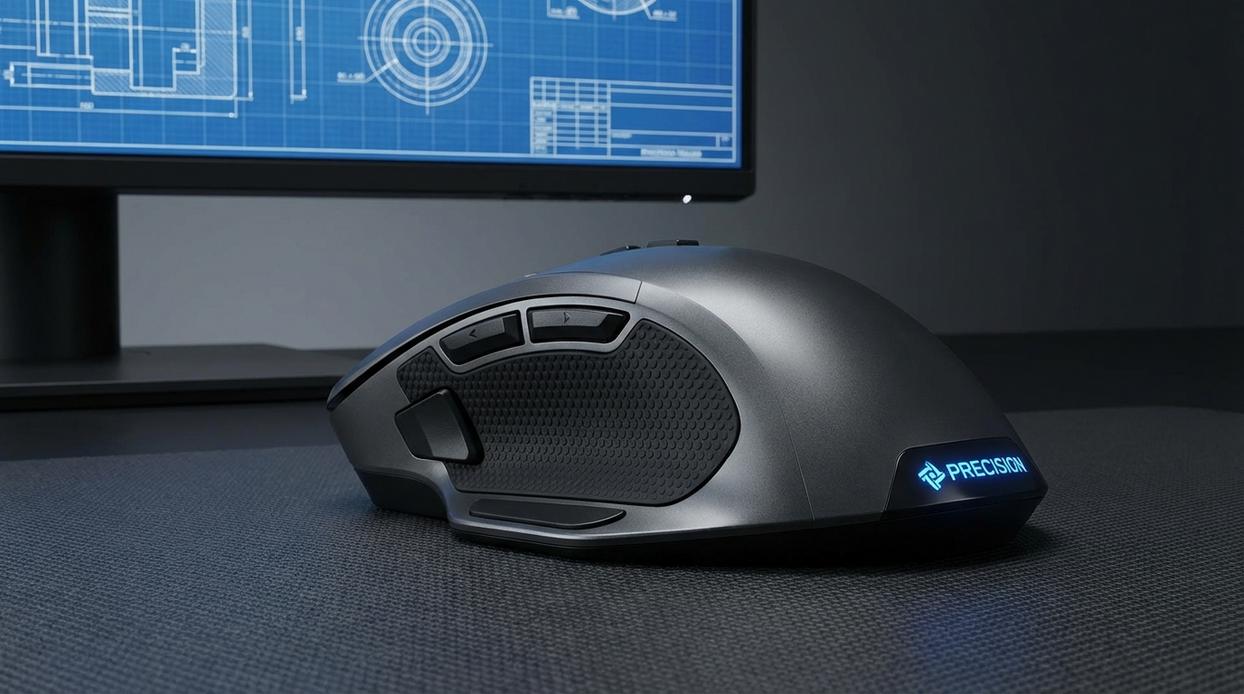
The first time I switched from a budget mouse to one with a PixArt 3395 sensor, I remember missing my shots for an hour straight. Not because it was worse—but because it was finally honest. No hidden smoothing. No artificial prediction. Just raw input. That’s what gamers mean by a flawless sensor: true 1:1 tracking, where your cursor goes exactly where your hand moves—without jitter (tiny unwanted movements) or angle snapping (forced straight lines). Specs like IPS (Inches Per Second) measure how fast the mouse can move while still tracking accurately. Higher IPS matters for fast flicks in FPS titles; if you’ve ever spun 180° in a panic, you know why.
Then there’s weight & balance. The shift to sub-60g mice isn’t hype—it’s physics. Lower mass reduces inertia (resistance to motion), which means faster micro-adjustments and less fatigue during long sessions. After swapping to a 58g mouse, my wrist strain noticeably dropped during late-night ranked grinds (your tendons will thank you).
Shape & grip style is where things get personal. Palm grip rests the whole hand, claw arches the fingers, and fingertip uses—well—just the fingertips. An ambidextrous shell suits fingertip users, while ergonomic curves favor palm grip. The wrong shape feels like wearing shoes half a size off.
Don’t ignore PTFE skates either. 100% pure PTFE feet create a smooth, predictable glide, and larger skates add stability. Pro tip: replace worn skates before blaming your aim.
Finding the best gaming mouse for accuracy isn’t about hype—it’s about harmony between sensor, weight, shape, and glide (like assembling your own Avengers squad, but for aim).
Elite Choices for the Aiming Throne
Precision isn’t luck. It’s the product of sensor quality, switch response time, weight balance, and software tuning working together in ruthless harmony. In competitive shooters and high-speed raid mechanics, your mouse isn’t just a peripheral—it’s your primary targeting system.
So what separates casual clicks from throne-worthy aim?
Sensor Performance: The True Core
A mouse sensor tracks movement and converts it into on-screen motion. Modern flagship sensors (like PixArt’s PAW3395 or Focus Pro variants) offer true 1:1 tracking, meaning there’s no acceleration, smoothing, or prediction altering your aim path. That translates directly into muscle memory consistency.
Some argue that most modern sensors are “good enough.” And yes, for casual play, that’s true. But in tight duels or flick-heavy metas, micro-adjustment precision determines whether you land the headshot or watch the kill cam in frustration.
Benefit: Cleaner tracking means fewer overcorrections and more reliable crosshair placement under pressure.
Weight Class: Speed vs Stability
Ultra-light mice (under 60g) dominate esports for a reason. Reduced mass lowers fatigue and improves rapid directional changes. However, some players prefer mid-weight options (70–80g) for steadier tracking during long-range engagements.
There’s debate here. Critics say ultra-light builds sacrifice durability. That was true in early honeycomb-era designs. Today’s reinforced shells largely solve that issue while preserving weight advantages.
Pro tip: If you play low sensitivity, lighter mice amplify your arm movement efficiency. High-sens wrist aimers may benefit from slightly more weight for control.
Switch Technology: The Click That Wins Fights
Mechanical switches use physical contact points; optical switches use light-based actuation. Optical switches eliminate debounce delay (the brief pause preventing accidental double-clicks), resulting in faster, more consistent clicks.
In rapid-fire scenarios—burst weapons, semi-auto spam, or RTS macro execution—that difference adds up.
DPI, Polling Rate & Input Latency
DPI (dots per inch) measures sensitivity. Polling rate (measured in Hz) determines how often your mouse reports data to your PC. A 1000Hz polling rate sends updates every 1ms.
Higher polling (2000Hz–8000Hz) reduces input latency further, but diminishing returns apply. Some argue the difference is imperceptible—and for many, it is. However, competitive environments reward even fractional responsiveness gains.
Pair your hardware upgrades with software tuning like optimizing keyboard settings for faster input response to remove bottlenecks elsewhere in your setup.
Shape & Grip Style Compatibility
Ergonomics directly influence consistency. Common grip styles include:
- Palm Grip – Full-hand contact for stability
- Claw Grip – Arched palm for rapid clicks
- Fingertip Grip – Minimal contact for fast micro-adjustments
The best gaming mouse for accuracy isn’t universally the lightest or most expensive—it’s the one that matches your grip and playstyle.
Build Quality & Skates
PTFE feet (mouse skates) reduce friction and improve glide. Premium models include heat-treated skates for smoother, longer-lasting performance. Combined with a quality mousepad, glide consistency enhances tracking precision.
In the end, elite aim isn’t about chasing hype. It’s about selecting features that reinforce your mechanics. The throne isn’t claimed by chance—it’s earned through optimized gear and disciplined control.
Beyond Hardware: Fine-Tuning Your Aiming Ecosystem
First, consider your surface. “Control” mousepads use textured fabric to add friction, giving micro-adjustments more stopping power, while “Speed” pads are smoother for effortless glide. Pairing pad texture with your skates can subtly reshape feel (yes, it’s that sensitive). I’ll admit, the perfect match is debated.
Next, disable “Enhance pointer precision” in Windows and stick to 800–1600 DPI for consistent raw input. Then, look at polling rate: 1000Hz is standard, but 4000Hz+ can reduce latency on high-refresh monitors—though gains aren’t always noticeable.
Even the best gaming mouse for accuracy depends on this ecosystem fully.
Before you make the final click, return to the fundamentals. Start with shape and grip style—palm, claw, or fingertip—because ergonomics (how a device fits your hand’s natural posture) dictate consistency. Next, dial in weight; lighter mice reduce fatigue during long sessions, while slightly heavier shells can steady shaky aim. Finally, consider sensor technology. In truth, modern flagship sensors are virtually flawless (yes, really), so this is your last filter, not the first.
Ultimately, the best gaming mouse for accuracy is the one that matches your anatomy and play style. Measure your hand, identify your grip, and choose with confidence today.
Level Up Your Aim and Dominate Every Match
You came here looking for clarity on what actually improves precision in competitive play—and now you know. From sensor quality and DPI tuning to weight balance and grip style, dialing in the best gaming mouse for accuracy isn’t just a gear upgrade—it’s a performance decision.
Missed shots, inconsistent tracking, and sluggish flicks cost you wins. The wrong mouse holds back your mechanics, no matter how strong your strategy or raid awareness may be. Precision is the difference between clutching the fight and watching the respawn timer.
Now it’s your move.
Upgrade to a mouse built for flawless tracking, optimized latency, and tournament-level consistency. Thousands of competitive players have already made the switch to high-performance gear designed to eliminate input lag and maximize control.
Stop fighting your hardware. Choose the best gaming mouse for accuracy, fine-tune your settings, and feel the difference in your very next match. Your aim—and your win rate—will thank you.
 Ryan Chensanilo is the kind of writer who genuinely cannot publish something without checking it twice. Maybe three times. They came to emerging gaming news through years of hands-on work rather than theory, which means the things they writes about — Emerging Gaming News, Expert Breakdowns, Hunt Strategy Breakdowns, among other areas — are things they has actually tested, questioned, and revised opinions on more than once.